

Wow, its been a while since we got an interview underway, but I am so excited to reignite this aspect of The Warren. With me being as naturally curious (nosy) as I am, to be able to have some of the creatives I admire so dearly giving us some time to chat & hear more about their practice is such a delight.
Starting off the year truly with a bang, we have the ultimate multi hyphenate creative force which is Francesca Gavin. Describing herself as a consultant, writer, editor and curator, Francesca is the most purest form of creative. You will likely know her as being the Co- Founder & Editor in Chief of Epoch, a solely print publication focussed on aesthetics, objects & ideas. However, this is but one notch in a very distinctive belt.
Gavin has also founded the creative consultancy ArtPresentFuture, that connects brands with visual culture and has worked with Hermés, Soho House, Ikea & Southeby’s. Furthermore, she is the Director of Visual Arts for Murmur, that looks to the power of visual arts & music to accelerate action against climate change. Alongside acting as Art Editor to Twin, a hardback biannual magazine that focusses on ‘disobedient, rebellious and visionary creative voices through art and cultural features’ since its inception in 2009; she somehow, despite all of the above, manages to host a monthly radio show ‘Rough Version’ on NTS radio, focussing on the relationship between contemporary art & music. She is also on the Advisory Board for the Centre for Fashion Curation.
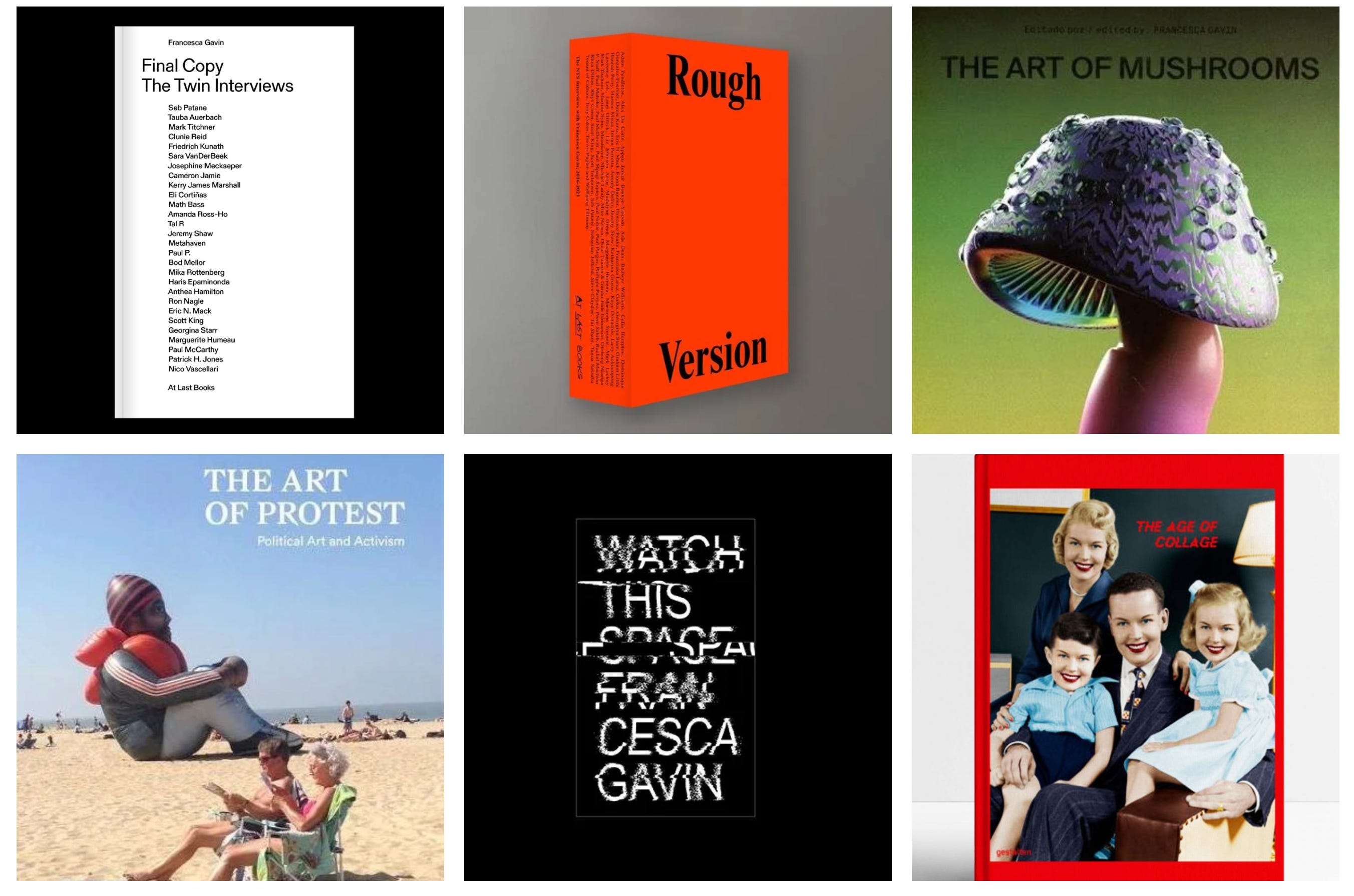
Amongst all of these various accolades and covetable positions, she has published eleven books on visual culture with titles including Final Copy, Rough Version, Watch This Space, 100 New Artists and Hell Bound: New Gothic Art.
All I can say is, there was a lot to talk about & truly I could have asked hundreds of questions. But I contained myself & I hope you enjoy .
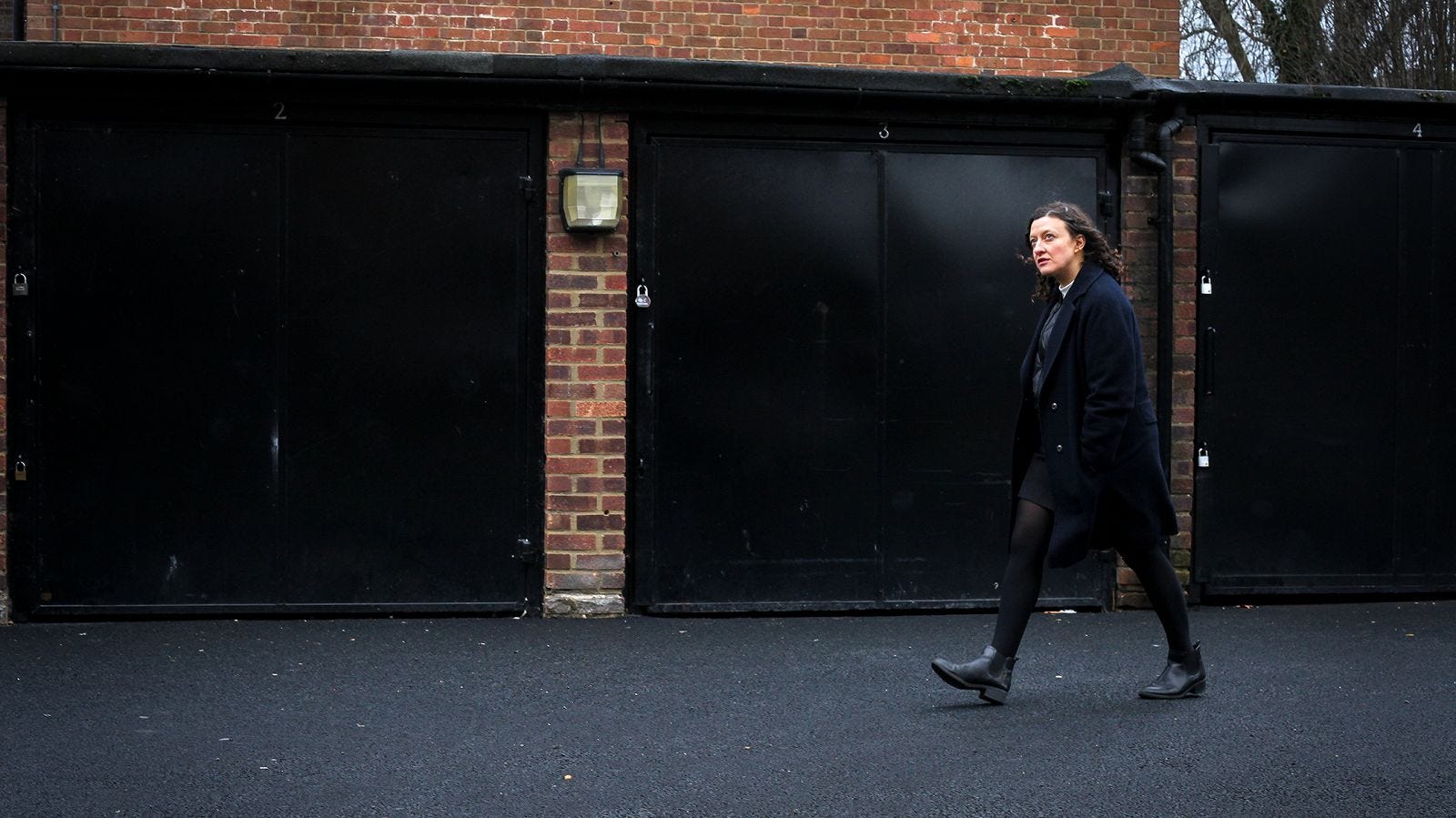
To start with, for anyone that is not familiar with you & your work, would you give us some context about your role, and how you established yourself in this industry?
I think people call it a portfolio career! I am the Editor in Chief of EPOCH which I co-founded. I am the presenter of a show on art and music on NTS, Rough Version. I’ve written 11 books on visual culture, curated exhibition everywhere from big institutions to project space to Manifesta biennial. I recently was the artistic director of an art fair, I also work with brands, whether that is building their art collections, advising on collaborations or creating content. It all grew out of editorial. I began as an intern at Dazed and became their book editor. I worked as a freelancer in magazines and somehow fell into curation. I’m confident and say yes a lot!
You seem like dare I say, a very busy woman, as someone who thinks they are busy but is doing only a fifth of what you do- how do you actually have the time to do it all?
To be honest I don’t even feel I use myself that much! I always say paying the rent is very motivating… I don’t come from deep privilege. I was a scholarship girl and learnt how to make the most of the opportunities I was given. Bluntly I’m just a nerd who works fast when I have to and likes to spend the rest of the time having coffee, visiting shops and doing dance classes! And naps. I love a nap.
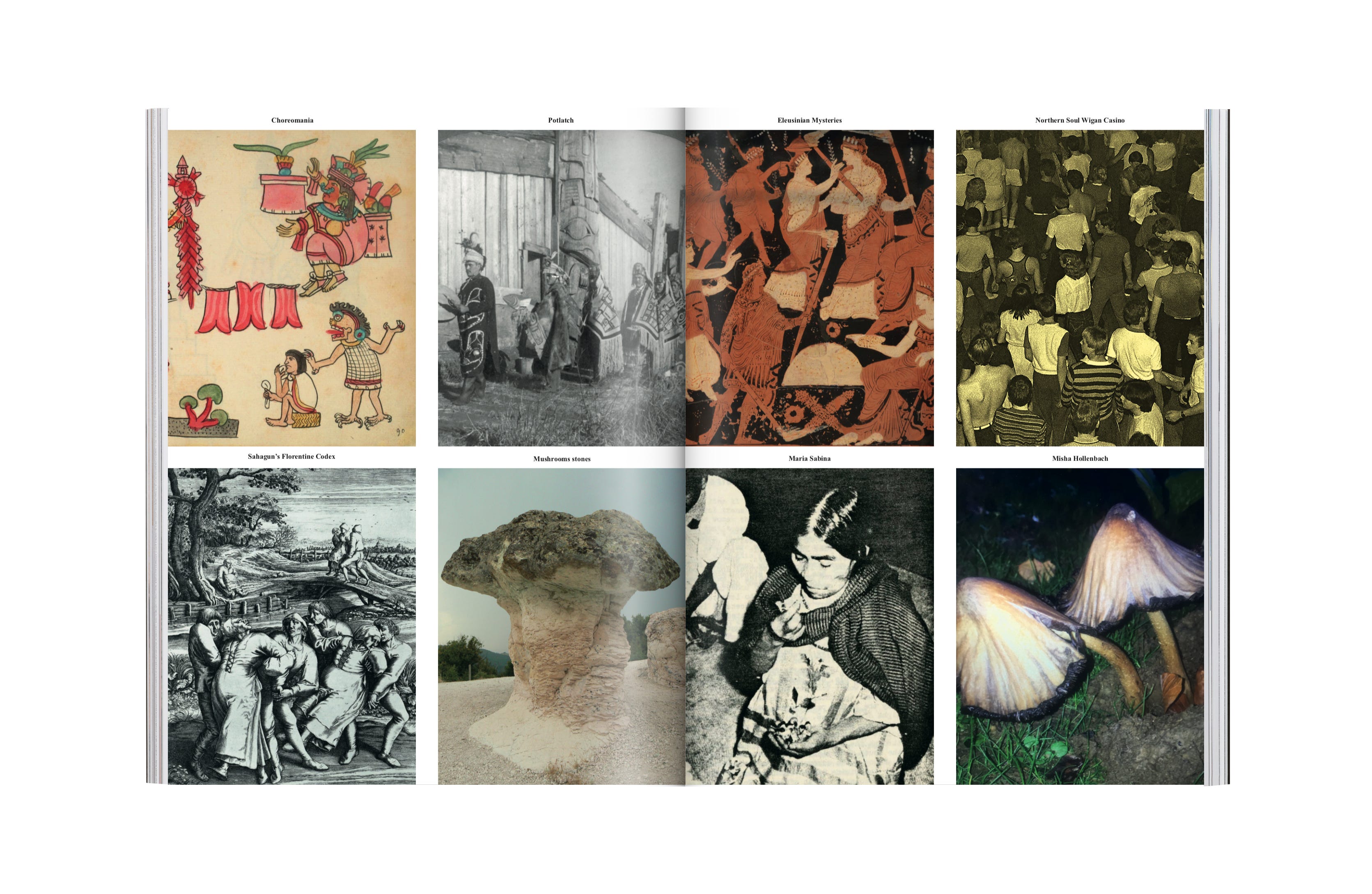
You’ve worked across a whole host of creative facets- exhibition, editorial, consultancy, books & broadcasting- what would you say you have learned from each?
They really feed into each other. A book is like a print version of an exhibition. A consultancy collaboration is like a feature in a magazine. Things move between 2D, 3D and moving image and sound. I have made relationships with artists in different contexts and then used them in others. From editorial I learnt how to keep things clear and accessible. From exhibition making I learnt how to present a concept and make contrasting work make sense. From consultancy I learnt how to balance needs and keep different parties happy. Overall being public facing is the easiest side of what I do. I’ve never had a problem with camera or coming up with an opinion!
It seems from looking at your career that all that you work on is by definition opportunities you have created for yourself based on what you want to be doing- whether that is launching magazines, broadcast shows, books or consulting as a freelancer. What advice would you give to creatives who are looking for that freedom to completely define and carve their career themselves as opposed to following a more traditional route?
It’s true. I’m very DIY! I never really got offered a role in house. I’ve always said yes a lot of offers, met my deadlines, juggled different projects, I’m a fast thinker and fast writer and I come through. Meeting people in the world has always led to things. Treat people with respect, be friendly, come up with a thousand ideas and work out how to make things happen!
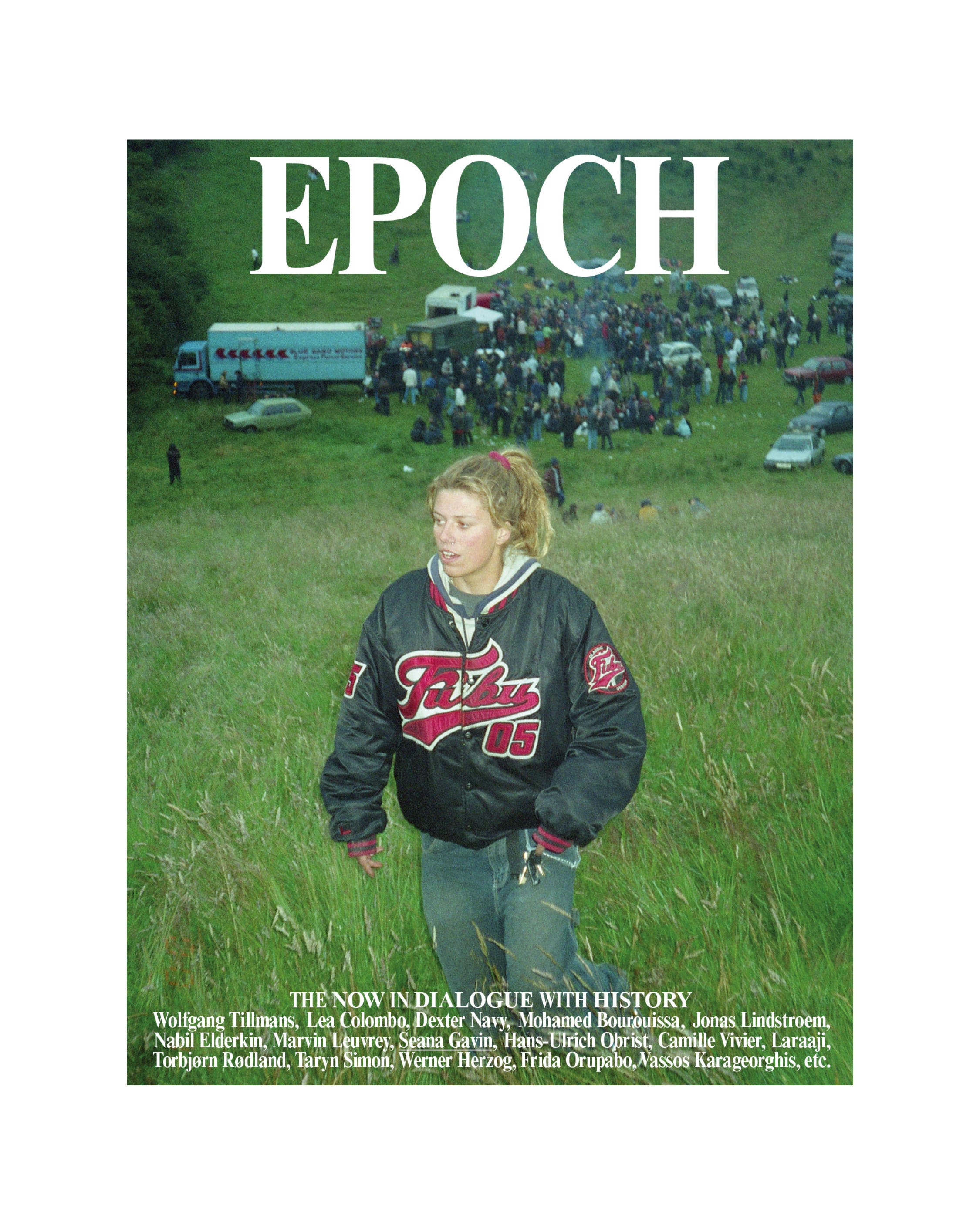
I want to give attention to each aspect of your career so let’s start with curation. With your work on exhibitions, would you be able to give us some detail on the process of your involvement as a curator- when are you brought on, how do you assemble the catalogue of work to be included, how much freedom are you given within this role?
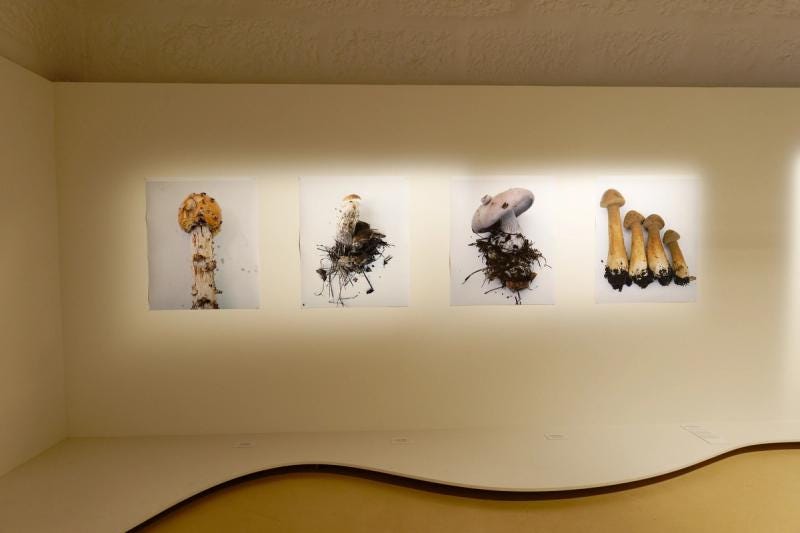
I usually get asked to conceive a proposal or an idea. So very much at the start, the concept comes from my interests, research, writing, curiosity. There have been a few occasions - for example mushrooms at Fundação de Serralves - where I have been asked to reimagine a topic of an earlier show. But mostly it’s me, getting inspired the art I see or something I read. Once I get a topic, the next steps are really straightforward. Looking at contemporary galleries for artists playing with an idea. Thinking of historic positions. Diving into my insta posts from past art fairs and gallery days. You make a dream list, have a proposal concept and then just reach out to people. Budget depending most people hopefully say yes!
However, has there been a show you attended that you wished you’d have had a hand in curating?
The Tarot show at the Warburg Institute earlier this year. It was incredible, in depth and fascinating. I wish I had done it.
Moving on to your work in creative books- congratulations especially on your recent new book ‘Final Copy: The Twin Interviews’ by the way. It’s my understanding that these are a collation of conversations published between 2009-2015 in Twin. This may be difficult to answer, but out of all these conversations what answer has particularly struck you the most or made the most profound effect on how you view the world?
Kerry James Marshall. I’ve had the privilege to interview him a few times. He rarely does interviews now. Talking to him it is impossible not to look at the representation of Blackness, the concept of history painting and the artistic canon in the same way.
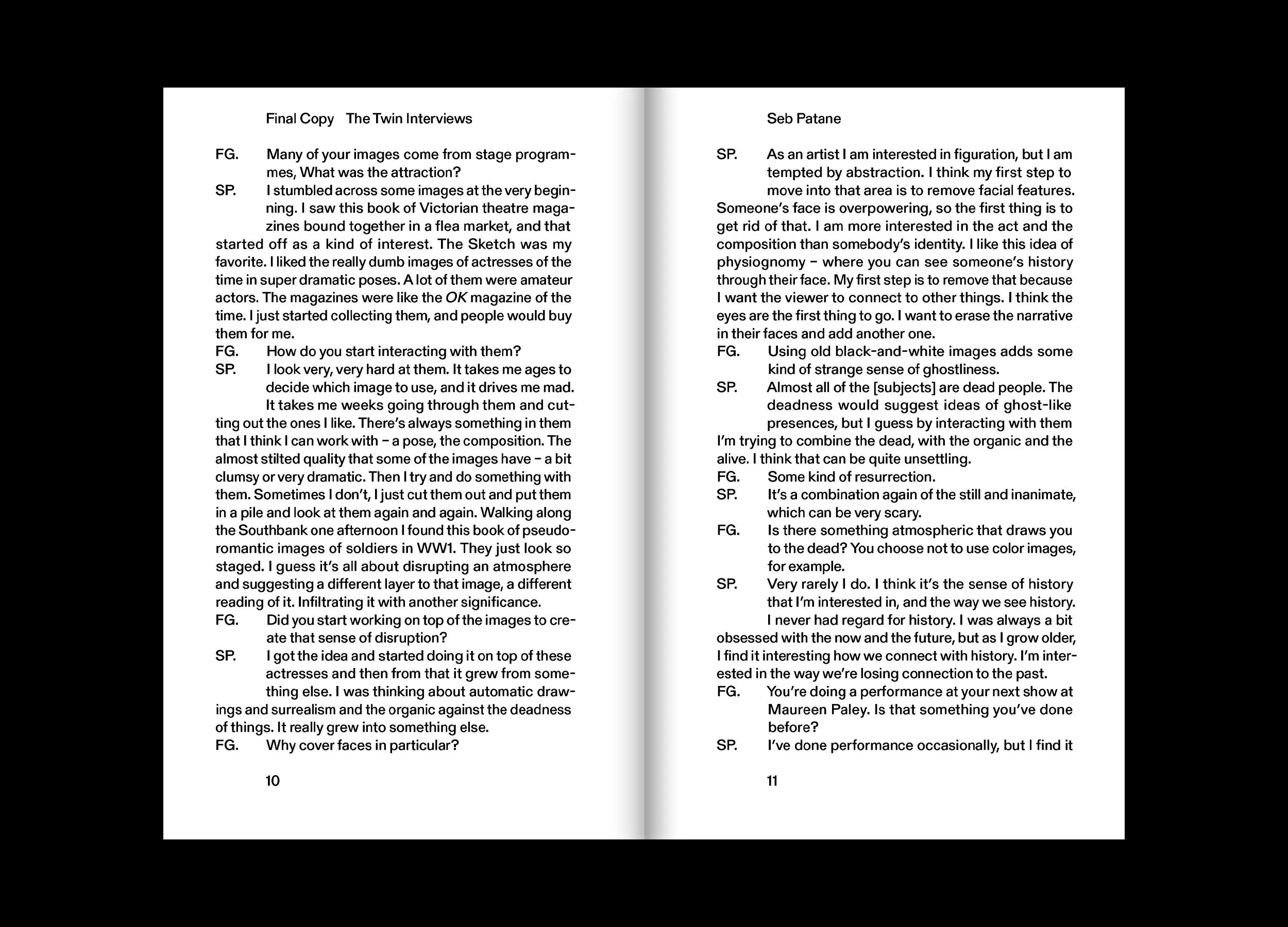
You similarly assembled a collection of interviews for your monthly radio show with NTS ‘Rough Version’ interviewing artists on their relationship with music as part of their practice. Who would you say was the most surprising interviewee & why?
Hard question! When you talk to people about music their barriers drop in such an interesting way. Lynette Yiadom-Boakye and Liz Johnson Artur were special. Liam Gillick got passionate and a bit shouty - that was fun.
With both of these collections, I’m assuming you had to select only certain interviews to consolidate into both- how did you go about that process?
Actually the aim is to be comprehensive - it’s usually just who responds to my request in time. I ask everyone of course if they are happy to be included. I’m working on the second volume of the NTS transcripts for the following four years. It’s one hell of a process.
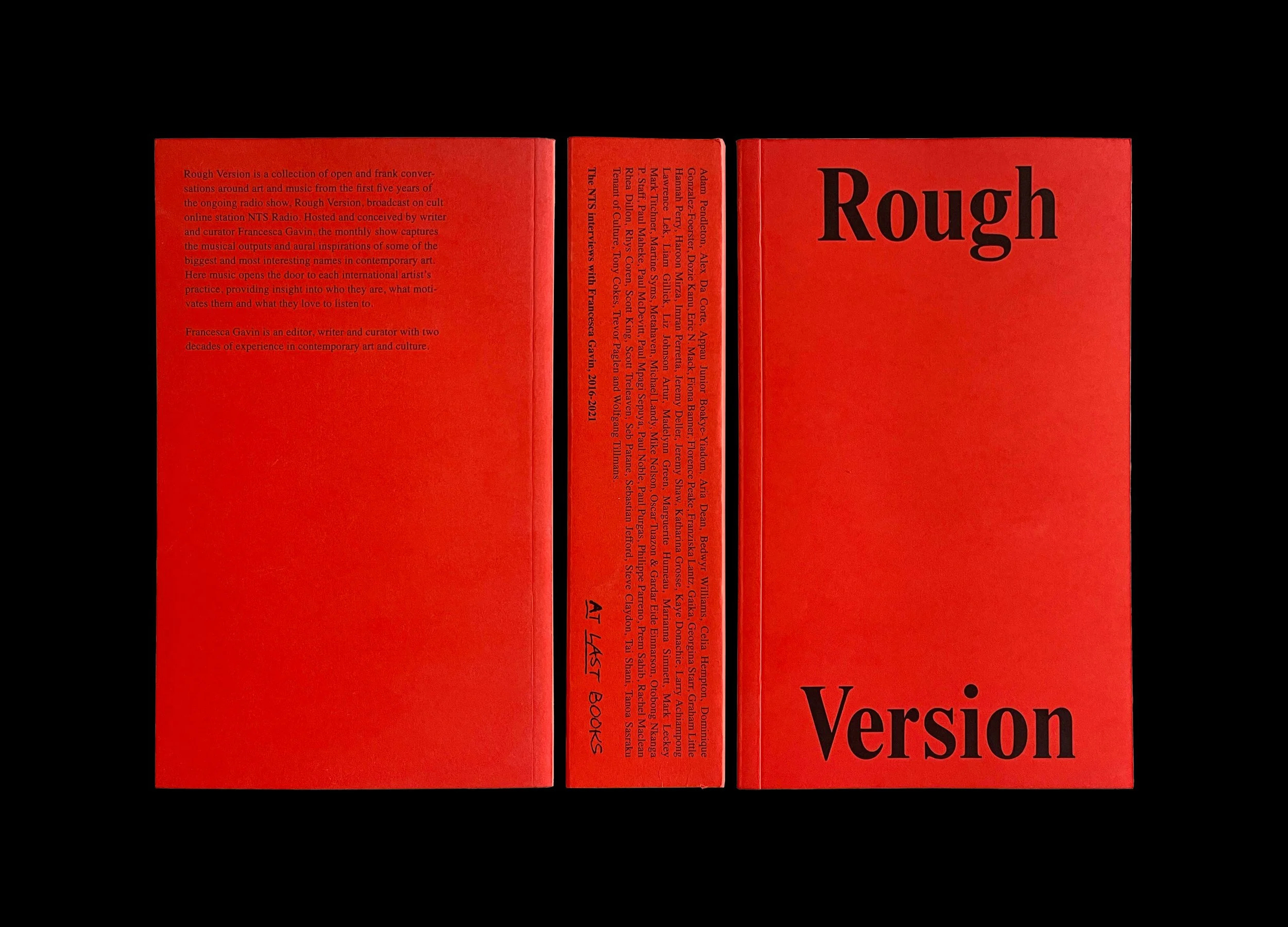
Taking a wee step back to your NTS show ‘Rough Version’ what prompted you to create a monthly show questioning contemporary artists on their relationship with music?
It just seemed the obvious choice - interviews come naturally to me and when I was thinking how to do a radio show, NTS was such a great platform and fit. I didn’t think too hard, came up with idea, a friend introduced me to Femi and the next thing I was chatting to Wolfgang Tillmans about his rave past!
Turning the table on you then, I would love some music suggestions for the below scenarios:
When you are brainstorming your next project?
Something without lyrics. Ahmad Jamal ‘Dolphin Dance’
En route to an important meeting?
Dinner with Gershwin by Donna Summer to get me in a good mood.
When you’re in the studio & wanting to get lost in your work?
Chris Read’s incredible series of mixes of hip hop breaks for Wax Poetics on mix cloud. I’m currently obsessed with Breaks 96-97.
Or in the midst of a creative rut?
Donny Hathaway - Thank You Master. A gospel track that makes you appreciate life.
Now to Epoch- in a world where people always seem to scream ‘print is dead’ & publications are generating streams of content online, Epoch is solely a print publication. Could you explain the rationale behind this?
Print has a longevity and a solidity that the digital cannot achieve. We wanted to make a publication so dense that when you move this is one of the few things you keep! Our brains cannot absorb physiologically in the same way on screen as in print. I also know from personal experience that the writing I have done online disappears. Print can last. And images look so good when they are bigger.
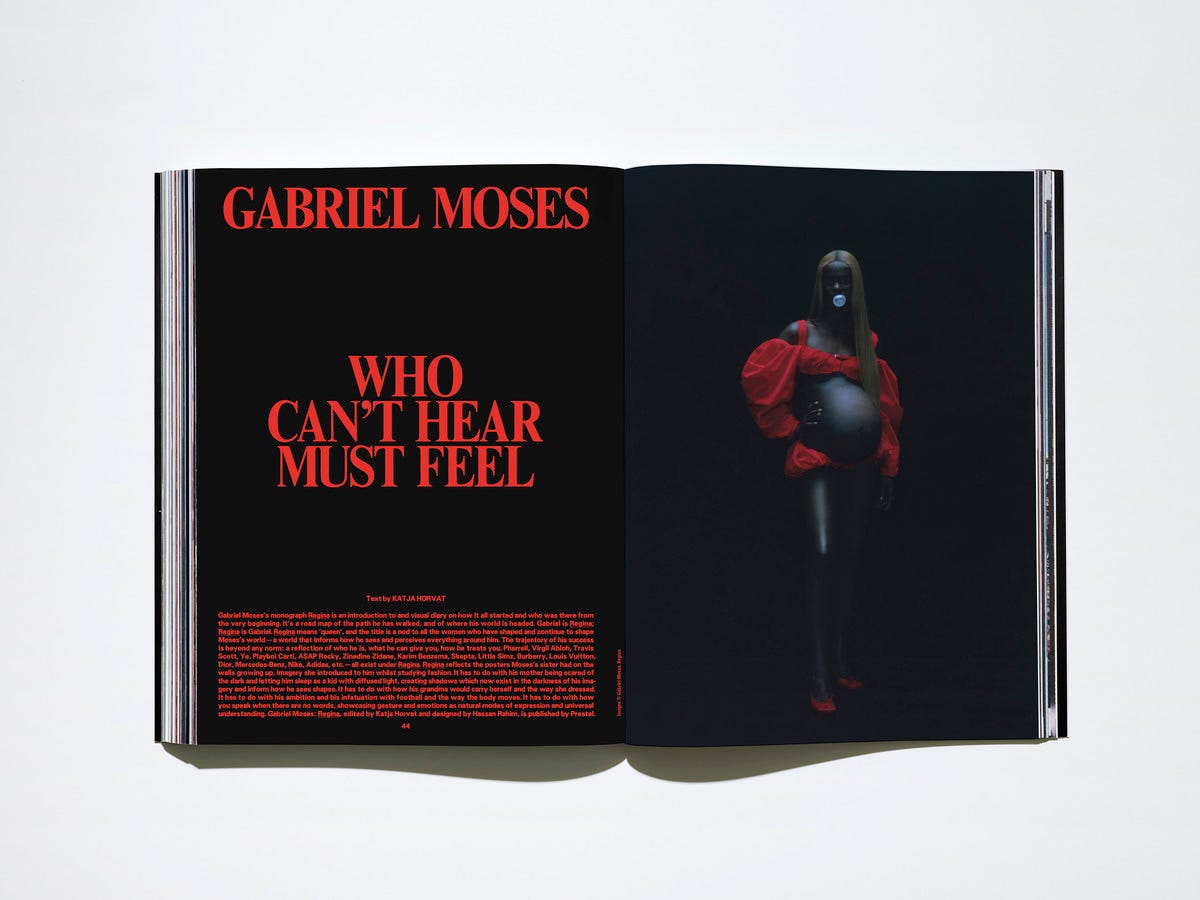
I’m fascinated with the symbiotic relationship between the now & our history that is so entrenched within Epoch- what motivated you to create an entire publication around this concept?
Leonard Vernhet conceived the idea of a magazine around the wholeness of civilization and came to me. The breadth of making the best publication out there was so enticing. Working with him has been the best creative partnership I’ve had.
And because I’m a nerd who likes history & must know- what is your favourite historical period?
I clearly want to live in a Nouvelle Vague movie circa 1961 in Paris.
You’ve collaborated with some of the most extraordinary artists in our time, even looking at the collection of posters on the Epoch shop attests to that. Can you share three artists you would have collaborated with, if they were around today, to contribute to Epoch?
Hans Bellmer (also the topic of my BA dissertation), Paul Thek, Tetsumi Kudo.
But equally because I’m nosy & because you have a great eye, who are artists right now that you have your eye on?
So so many. I’m a bit obsessed with the growth of contemporary kinetic art like Tobias Bradford and Anna Franceschini. Painter Cecilie Norgaard. Performance artists Florentina Holzinger, Michele Rizzo. And I’m so feeling sculpture.
I know that I’ve chewed your ear off, but that is to be expected when you have such a diverse career to cover. To tie this all up, however, despite all that you do, is there anything you are looking to achieve in your next stage as a creative?
More! I’d love to expand working at the intersection of art and fashion and music and broadcasting and reach as broad an audience as possible.
This was such an awe inspiring interview for me, just in the beauty of never being contained to one practice, or aspect of you career. Francesca is the perfect example of showcasing that there is no cap on what you can do or be, that there is always more for the taking.
I would truly recommend checking out Francesca’s website where she also has a blog, but I will leave links to her various projects & partnerships below.
Rough Version: The NTS Interviews (Book)
Final Copy: The Twin Interviews
Meanwhile if you tea is still warm, you can find some of our other interviews below:


Gorgeous interview!! She seriously takes multi-hyphen to another stratosphere.
Really good . Will try to get some Epoch numbers for the office